
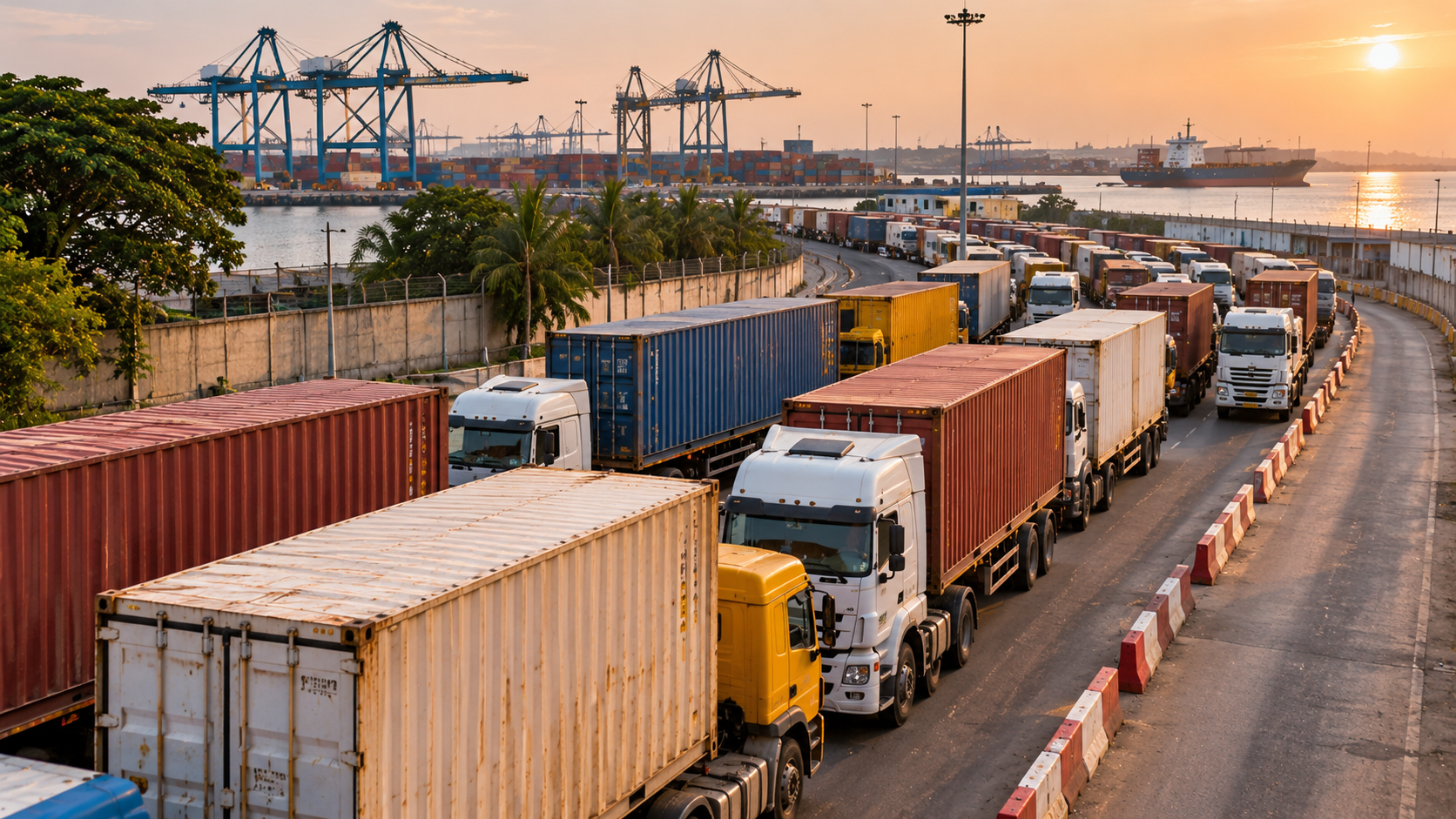
When ports around the world talk about cutting emissions, the plans usually focus on what happens inside the fence, with electric cranes, cleaner cargo-handling equipment and shore power so that ships can switch off their engines at berth. Those things matter, but anyone who has driven near Apapa or Onne knows that a large share of port-related pollution in Nigeria happens before a container ever reaches a crane, in the lines of trucks waiting, sometimes for days, to get through the gate. A truck sitting in a port queue with its engine running burns fuel without moving any goods, and when you multiply that by hundreds of trucks and many hours, the fuel wasted around a busy port becomes significant. The drivers pay for it in long days and poor conditions, the owners pay for it in fuel and lost trips, and the neighbourhoods around the port pay for it in poor air and blocked roads.
Lagos has lived with this problem for years. The Nigerian Ports Authority introduced an electronic call-up system for trucks at the Lagos ports to bring some order to arrivals, and it has helped, although operators still report delays and informal charges along the way, while Onne in Rivers State faces similar pressures as more cargo moves through the eastern ports. For a shipper or logistics company reporting its freight emissions, the time a truck spends idling at a port gate is part of the journey and part of the footprint, and under methods such as ISO 14083 the hub activity and waiting linked to a shipment are meant to be accounted for. In practice most estimates miss it entirely because they calculate emissions from distance alone, which means the reported figure can sit well below the real one.
This is where trip-level data helps. If an operator records the fuel used on each trip and the time each truck spent at the port, the difference between port runs and ordinary runs of a similar distance becomes obvious, and that evidence is useful in discussions with customers about waiting charges while also giving port authorities and terminal operators a clearer picture of what congestion is really costing.
Some of the fixes sit with port authorities and terminals, such as better appointment systems, more truck holding parks with proper facilities and faster processing at the gate. Others sit with operators, who can plan arrival times around terminal appointments, keep drivers informed so they do not set off too early and encourage engines off during long waits, and shippers can help by agreeing realistic collection windows and choosing transport providers who can show how they manage port runs. Measuring waiting time and fuel at port gates in a consistent way would also allow improvements to be shown with numbers rather than anecdotes. Port decarbonisation will eventually include cleaner trucks and cleaner equipment, but for Nigeria one of the quickest wins sits right outside the gate, in getting trucks in and out with less waiting.
SMG helps logistics businesses and public bodies measure the time and fuel lost in port and depot queues. To discuss a project, write to hello@smgconsulting.ng.